Filipinos love concerts, but venue infrastructure gaps are a threat to the experience

Countries with better, bigger, and more competitive concert venues have reaped economic benefits, especially with the massive and significant influence of popular international acts like pop superstar Taylor Swift’s Eras Tour and Coldplay’s World Tour in consumer behavior and spending. 


Driving tens of thousands of ‘Swifties’ and concert enthusiasts, the success of these concerts was an economic stimulus for countries worldwide, including Southeast Asian countries such as Singapore and Japan.  Filipino fans alike had to spend big and travel miles to watch the exclusive performance of superstar Swift in Singapore’s National Stadium while others went to Japan’s Tokyo Dome and Sydney’s Accor Stadium in Australia. The massive concert gigs boosted the respective country’s economies, benefitting entertainment, hospitality, retail, and transport industries significantly.


While Singapore’s strategy for a Southeast Asia-exclusive Swift performance piqued interest and likewise piqued its neighboring countries, the strategic move sparked conversations and brought to light what the Philippines can improve on in terms of concert venues.

1. Location is key

The Philippines doesn’t lack in big venues. In fact, it boasts of venues that can rival Singapore’s National Stadium and Japan’s Tokyo Dome. Accessibility to the location as well as public transportation and nearby commercial establishments are key.


2. Concert Experience

Photo credit to Stanley Quek. An empty Singapore National Stadium, viewed from the front stage.


Singapore’s pride, the National Stadium, has innovative features such as the world’s largest free-spanning dome, a retractable roof, and comfort cooling technology for spectators’ convenience. Its innovation, strategic location, and efficiency bring positive and immersive experiences for enthusiasts and concert fans, making it a magnet for entertainment acts from all over the world. A similar concert venue and experience is something that Filipino concertgoers are hoping the country can replicate. 

3. World-class concert amenities and facilities


Accessing the venue's amenities and facilities should offer a premium music experience for concert enthusiasts or convenience in a sporting event.

Architectural “Eyecon” SM Mall of Asia Arena prides itself on having exceptional world-class amenities unique in the Southeast Asia region. –Photo from SM MOA Arena official website


FIBA Basketball World Cup 2023 held in SM Mall of Asia Arena – Photo from SM MOA Arena official website

Take for example the SM Mall of Asia (MOA) Arena – a flexible indoor arena developed in 2012 by leading integrated property developer SM Prime – that has been a top-of-mind venue for all sorts of events and offers a unique concert experience. With a full house seating capacity of 20,000, it has been a haven for thrilling sports events, remarkable OPM shows, and unforgettable international superstar performances. 


Meanwhile, the SMDC Festival Grounds in Parañaque City is likewise an enormous outdoor venue that can accommodate at least 50,000 people. Ed Sheeran’s Mathematics Tour and Rivermaya The Reunion were among the performers that have graced the stage recently.


4. Achieving Filipinos’ concert dreams

One of the most forward-looking plans of SM Prime is its 360-hectare smart city development which is envisioned to bring in a centerpiece to the country’s entertainment and sporting events – larger in capacity and a more enhanced venue infrastructure that would attract legendary icons in the entertainment scene and compete against Southeast Asia and the world’s best. It will feature an estimated 70,000-capacity stadium and concert arena connected to one of the island’s main destination paradises called Central Park. The sizable arena is envisioned to be the Philippines’ biggest concert venue, with world-class facilities and sustainable features, comparable to other big concert venues worldwide. Once that’s built, Filipinos won’t have to fly overseas because they can watch top-tier performances right from the comfort of their home country.


An artist’s render, visual sketch of the proposed concert venue at Pasay 360 project.


A crowd of people on a stage with bright lights

Description automatically generated

https://www.pexels.com/photo/band-playing-on-stage-2747446/


Without a doubt, Pinoys live and breathe entertainment shows. In fact, Filipinos are the 4th top concert spenders in Asia-Pacific according to digital payments company Visa, proof of how passionate we are about concerts. By investing in the development of modern, smart, and accessible concert venues, Filipino concert enthusiasts can continue to embrace and celebrate live performances with the convenience, comfort, and enjoyment they deserve. Beyond entertainment, well-curated, smart, and innovative concert facilities can further drive economic benefits to the Philippines’ national and local economies, including ancillary local spending in retail, tourism, and hospitality.

Jobs on the Rise: New Urban Developments Are Driving Employment Growth


Photo credit to Anamul Rezwan. Construction jobs are generated from new urban developments.


Cities worldwide, while diverse in demographics and culture, share a common pursuit of progress through new urban developments. These projects not only enhance convenience amid urban congestion but also stimulate local economies and communities through various socio-economic activities like job creation.


Whether in the form of public transportation, cutting-edge business districts, or towering residential communities, a single new development requires a whole host of jobs from pre-construction, to construction, and completion. These range from real estate developers and planners to construction workers and suppliers – all requiring extensive collaboration for successful project development.


Hudson Yards: Direct and indirect employment opportunities


Photo credit to Following NYC. Featuring ‘Vessel’, a honeycomb-like structure and visitor attraction in the Hudson Yards Development in Manhattan, New York City. 


The cycle of job creation doesn’t stop after completion. A new development also drives indirect employment opportunities generated from industries attracted or related to the development. 


Such is the case for Hudson Yards, New York City’s 28-acre mixed-use development and considerably the United States’ biggest megadevelopment in history. It had created thousands of construction jobs that resulted in transforming Manhattan’s iconic skyline and becoming home to diverse shops, offices, cultural institutions, and hotels and residences. Ongoing operations and management of these facilities are expected to contribute to its large-scale economy, such as hosting over 55,752 workers daily and about $19 billion annually to the city’s GDP. 


Dubai and Songdo IBD: Creating economic opportunities afresh


Meanwhile, cities like Dubai and Songdo International Business District (IBD) generate jobs by creating economic opportunities from the ground up. They used land reclamation as an urban development strategy to address land scarcity and high population density challenges.


Photo credit to Kadir AvÅŸar. A closer aerial view of the Palm Islands. 


Dubai's ambitious projects, including the Palm Islands, the World Islands, and Burj Al Arab, have turned it into an ultramodern metropolis for commerce and tourism. In 2023, it drew over 30,000 new businesses, driving demand for talent in finance, legal, and digital technology sectors.


The Songdo IBD is an ongoing smart city built on reclaimed land in Incheon, South Korea. It’s designed to be an international business and residential hub with sustainable features. As of 2020, the 1,500-acre development hosts about 30,000 residents, 33,000 jobs, and 70% fewer emissions than any other development.


SM’s Integrated City Developments: Empowering local communities and residents


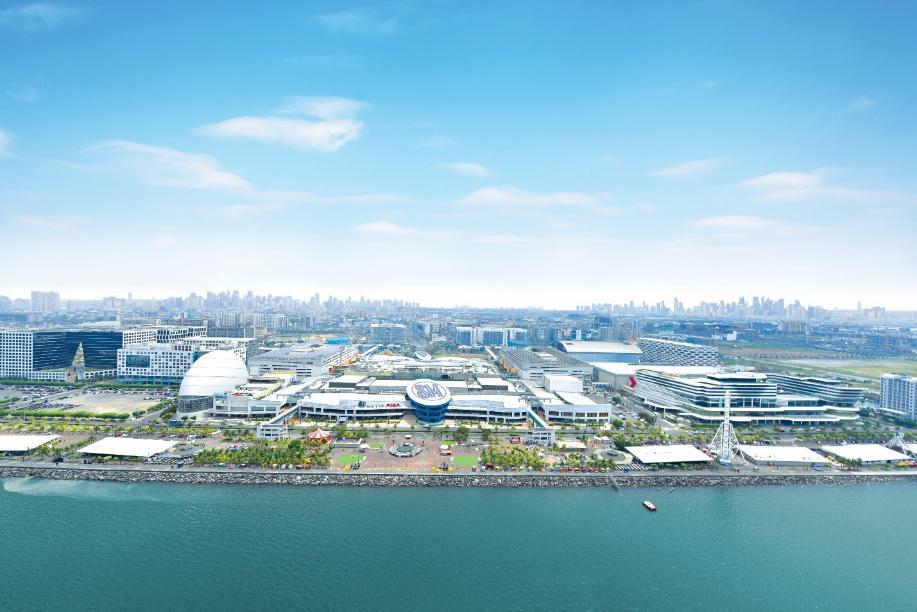
SM Prime contributed photo. An aerial view of SM Mall of Asia (MOA) featuring its iconic Globamaze and thriving network of retail, business, residential, and hotel developments. 


The SM Group, a leading conglomerate in the Philippines, has an ecosystem of interests spanning retail, banking, property, and mall developments across the country, making it the largest employer with over 140,000 employees.

For every SM mall development by SM Prime Holdings, the integrated property developer of the Group, the local economy is invigorated because of the opportunities created by supporting small and medium enterprises (SMEs) that comprise about 68% of its mall tenants. For instance, SM City Bataan, SM Supermalls’ 83rd mall, employs about 96% of its mall administration staff who are residents called Bataeños, including two in leadership roles. It also proudly showcases local industries by partnering with homegrown businesses like family-owned brands and locally managed franchises. 


Job security, stable income, and tax revenues contribute to the local workforce’s quality of life; and SM Prime ensures to manifest these waves of progress in its developments, especially in its future plans for smart cities in the Philippines to be spearheaded by its ongoing 360-hectare development in Pasay City.


New urban developments are catalysts for growth, innovation, and avenues for increased prosperity, shaping local economies through job creation and improved lives. The success of these city centers requires a network of opportunities – from its pre-construction supply chain to empowering businesses for individuals to thrive and contribute to the communities.


A school renovation project amplifies the potential of deaf community


A teacher teaching students in a classroom

Description automatically generated

A dedicated teacher from PSD provides a hands-on lecture inside their newly rehabilitated school building.


Being hearing-impaired is a challenge in itself, navigating a world where communication relies heavily on spoken words. 


In the Philippines, this challenge further creates a gap, as opportunities for the deaf are limited, particularly in education and employment. The struggle is intensified as only a few secondary learning institutions are catering to their unique needs, with affordability and facility conditions further hindering their pursuit of skills and knowledge. 


A personal advocacy 

Shery Funcion, the Principal of the Philippine School for the Deaf (PSD) in Pasay City, is no stranger to these challenges. 


Her dedication to the cause began with her college thesis, focusing on job opportunities for deaf learners. Since then, she has immersed herself in various organizations and volunteer activities, gaining firsthand insights into the limited opportunities available to deaf learners. 


She eventually became a SPED teacher, before taking on the role of principal in PSD. 


"The immersive experience really showed me how important these projects are for our students—kung gaano kahalaga ang pagbibigay ng mga pasilidad sa mga mag aaral lalo na sa mga bingi," she underscored the importance of providing facilities for students with hearing impairment. 


A facility that produces opportunities 


A group of people working on a sewing machine

Description automatically generated

The collaborative project of the Henry Sy Foundation, SM Foundation (SMFI), and the Department of Education's Schools Division Office of Pasay City equips students with in-demand skills that will prepare them for employment upon graduation.


In the century-old PSD, their senior high school laboratory building serves as the training ground for students. Its classrooms and halls, no matter how old, have always played their role in honing and preparing deaf students to have solid career prospects after PSD. 


Amidst the competing priorities within the school and the broader Philippine educational system, the facility barely had enough funds for the rehabilitation and major repairs it needed. For years, students and teachers worked around issues ranging from dim lighting and leaking roofs to uneven floors. These not only presented structural concerns but also hindered the overall learning experience of students. 


"Our deaf learners need special accommodation to fulfill their special educational needs. They need to have a conducive learning environment so we can optimize the activities and learning programs," Funcion stressed. 


Funcion further shared that the 2023 collaborative project of the Henry Sy Foundation, SM Foundation (SMFI)—the social good arm of the SM Group, and the Department of Education's Schools Division Office of Pasay City could not have come at a better time. 


 "The rehabilitation of the Home Economics (HE) laboratories is crucial because students need to fulfill their performance tasks. These are vital components of our senior high school program to ensure that they acquire essential skills and competencies for employment post-graduation from PSD." 


Through the collaboration, PSD has been provided with much-needed facilities in dressmaking, beauty care, cookery, electrical, bartending, food and beverage preparation, ICT, and dance. 


For Funcion, their Henry Sy. Sr. building serves as a great beginning that will help pave equal opportunities and create a future where deaf students’ abilities will shine within and beyond the four walls of classrooms. 


A group of people looking at a computer

Description automatically generated

Through the collaboration, PSD has been provided with much-needed facilities in dressmaking, beauty care, cookery, electrical, bartending, food & beverage preparation, ICT, and dance.


A moment that changed lives

SM scholars recall the beginning of their SM scholar journey

Some moments fade with time, and certain experiences leave an indelible mark, shaping not just our paths but our very identities. For Atty. Marmie Deniega and Amanda Hora, the SM scholarship application wasn't just a gateway to education; it was the moment that shaped the life they live today.


The first to obtain a degree in the family


A family legacy, SM scholar Amanda Hora becomes the first in her family to earn a degree.


Amanda’s unforgettable story as an SM scholar began when she stumbled upon a Facebook post about the SM scholarship application.


“It has always been my dream to pursue a quality education without the burden of tuition expenses. I enrolled in a university in Senior High School because of a scholarship, and I know that the only way to continue my college years at the same university is to obtain another full scholarship. That is why I never hesitated to apply for the SM scholarship, hoping to be accepted,” she said. 


In the quiet hours of the night several years back, an email from the SM Foundation lit up her phone’s screen, informing her that she had been selected for their scholarship program.


The acceptance was a mark that she was a few steps away from fulfilling another goal: “I pursued college because I wanted to become the first in our family to get a college degree.”


“My parents did not finish their studies due to financial difficulties, but they’ve always been supportive of my dreams and aspirations. Also, I believe in the importance of quality education. It is something that nobody can take away,” she added.


Amanda snaps a photo with her family as she graduated cum laude with a degree in BS accountancy in 2023.


The scholarship opened doors throughout her college years. Beyond the academic realm, she had the opportunities to join competitions, intern at prestigious firms, and build a network that extended far beyond the classroom. 


She shared: “As a scholar, the foundation’s programs and webinars allowed me to hear inspiring stories from other scholars, mentoring and motivating us to pursue our goals. When COVID-19 affected the country and whenever there were calamities, the SM Foundation looked after us. They provided us with tools that are essential for remote learning. It made me feel that I am part of a bigger family and that I am not alone in this journey.”


These experiences paved academic and personal growth. As she graduated cum laude with a degree in BS accountancy in 2023, she aims to contribute to the community by creating a ripple effect of kindness.


“I would use my knowledge to find ways to provide livelihood programs, especially in areas or communities where it is much needed. I would also advocate for financial literacy to help people effectively manage their finances and build resilience, especially during unpredictable life events. I would also use my story to inspire the youth, especially the current and future scholars, and remind them to never give up on their dreams,” she shared.


Scholar makes an impact on the community


Atty. Marmie Deniega (fifth from left) with her colleagues from IBP-Cebu Chapter.


Much like Amanda is CPA-lawyer Marmie Dyan Deniega.


Raised by a single mother amid financial struggles, the pursuit of a college degree seemed like an unattainable dream until she chanced upon a TV commercial that introduced her to the SM College Scholarship.


Recalling vividly the moment, she shares: “My mother and I were watching the television. The commercial for SM Foundation came in, and the application deadline was flashed through the screen. Coincidentally, it was on that day itself, so I rushed and submitted my application at the nearest SM Mall."


The scholarship became the cornerstone of Marmie's academic success. She graduated with cum laude honors in Accountancy from the University of San Jose-Recoletos, crediting the scholarship for providing not only financial support but also the freedom to focus on her studies. 


The scholarship not only shaped her academic journey but also fueled a sense of responsibility, which proved valuable when she pursued a law degree with the help of her aunt and part-time jobs.


Now successful in her field, Atty. Marmie travels and enjoys various leisure activities. Beyond this, she is thankful to have the capability to support her family.


Now, she proudly serves as an Attorney III at the Business Permit and Licensing Office (BPLO) of Mandaue City, actively contributing to her community's development. She is one of the people who played a pivotal role in streamlining business permit processing in their city, making it more accessible to constituents.


As a firm believer in spreading social good, she finances the education of her siblings while actively engaging in community-based projects. She also stands as a resource speaker in schools for several crucial topics, such as the Anti-Bullying Law.


Apart from legal aid work in far-flung areas in Cebu, through the Integrated Bar of the Philippines-Cebu Chapter, she also volunteers with Law Inc., an organization helping victims of Violence Against Women and Children (VAWC). She conducts seminars across various locations in Cebu, shedding light on the intricacies of VAWC.


In the confines of her office, clients naturally turn to her for legal advice, seeking guidance on various matters: “It cannot be helped that clients will also seek legal advice from me, hence I also make it a point to help them, to the best of my ability, and within the boundaries set by law."


Amanda and Marmie's stories are not just individual triumphs but testaments to the impact of education. Each year, countless dreamers like them are empowered to pursue their academic aspirations and chart their paths to success through the SM College Scholarship Program.


As the application for the SM College Scholarship Program opens from Feb. 1 to March 31, 2024, countless more lives stand to be touched. 


Make the Best School Year Possible with Home Credit’s Sulit Study Laptops, Tablets


Score Great Savings on Study Gadgets this Back-to-School Season with Home Credit

Get your kids now sulit tablets, and laptops to enjoy low installment plans below PhP1,499 or PhP999 per month with 0% interest!

With the new school year ahead, parents, especially moms, are taking charge of preparing everything their kids will need to equip them with essential tools this back-to-school season. However, as we embrace the era of modern learning, where technology has taken center stage in driving students’ education, providing them with the proper study devices is no longer a luxury but a necessity.

Luckily, getting these devices does not require breaking the bank, as Home Credit is the key to availing these gadgets in low monthly installment plans with 0% interest.

From budget-friendly laptops under PhP1,499 per month to ‘sulit’ study tablets for schooling below PhP999 per month, the leading consumer finance company offers a wide range of options you can choose from to provide your kids with an efficient partner this academic year. Some of these options include:


First on the list of value-for-money laptops below PhP1,499 per month is the ASUS Ryzen 3 Laptop. Equipped with an AMD Ryzen 3 processor complemented by 8GB of RAM, this ASUS laptop can easily handle everything without lags—whether it's taking notes, conducting research, working on assignments and projects, or accessing learning platforms.

This device also comes packed with 256GB of storage to provide your kids with enough space to save their school files and necessary applications. Additionally, it boasts a 14-inch display and weighs only 1.60kg, making it an excellent choice for students who are always on the go.


Another option is the HP 15S i3 Silver Laptop, which you can also get for less than PhP1,499 per month. Powered by an Intel Core i3-1115G4 processor supported by 8GB of RAM, this laptop enables your kids to multitask easily, providing them with an efficient learning partner.

Built with a 512GB capacity for substantial storage and featuring a Windows 11 operating system, this HP laptop allows your kids to navigate it easily thanks to its user-friendly interface. With a 15.6-inch display, this device weighs only 1.7kg, providing a lightweight laptop that your kids can easily take to school.


Next on the list of laptops below PhP1,499 per month is the Acer Aspire 3 i3. Packed with an Intel Core i3-1215U processor and partnered with 8GB of RAM, this device can smoothly handle basic school tasks like web browsing, opening documents and files, and much more.

Apart from that, this Acer laptop features a 512GB internal capacity, offering ample storage for your kids throughout the school year. Additionally, the device boasts a 15.6-inch display for comfortable viewing of study materials. With an approximate weight of 1.78kg, it is easy to carry.


If you are looking for more portability for your kids, a tablet is the right fit. For this purpose, Home Credit offers a wide array of pills to choose from, all below PhP999 per month. One of these options is the Realme Pad 32GB/3GB Tablet.

Built with a Helio G80 processor and 3GB of RAM, this budget-friendly tablet provides efficient performance that your kids can rely on when working on their school tasks. With a 32GB internal capacity, it offers enough storage to keep your kids’ notes, digital materials, and educational apps throughout the academic year.

For a more reliable device, this Realme tablet carries a substantial 7100mAh battery, providing students with enough power every day. It supports an 18W Quick Charge to easily recharge the battery, minimizing downtime for your kids while completing their assignments and projects on time. Sporting a 10.4-inch display and a lightweight design that weighs only 0.44kg, it is highly convenient.


Expanding your options for tablets below PhP999 per month is the Samsung Galaxy Tab A8 LTE. Powered by a Unisoc Tiger T618 processor with 4GB of memory, this Samsung tablet offers exceptional performance for your kids' day-to-day tasks.

These features are complemented by 128GB of internal storage, expandable with a microSD card of up to 1TB, ensuring that storing large files is never a problem. With a 10.5-inch screen and a 7040mAh battery capacity, this tablet provides your kids with an exceptional learning companion.

Furthermore, it includes a built-in screen recorder, enabling students to record live online classes and review them at their convenience. It also offers safety features like Samsung Kids, which allows your children to explore and connect to the Internet securely.


Another tablet below PhP999 per month, available via Home Credit, is the Huawei Matepad T10 LTE. Equipped with a Huawei Kirin 710A processor, this device delivers seamless multitasking, allowing your kids to switch smoothly from one app to the next without experiencing slow response times. This is supported by 2GB of RAM and 32GB of internal storage, contributing to better overall performance.

The Huawei Matepad T10 LTE also boasts a generous 5100mAh battery capacity, providing enough power for your kids to complete their tasks throughout the entire day. The Huawei Matepad also features a 9.7-inch HD screen for incredible viewing and weighs only 450g, ensuring easy portability for your kids.

Empower your children's school year now with ‘sulit’ study laptops and tablets! Don't miss out on Home Credit's back-to-school promotion, offering staggered payment options with 0% interest to provide your kids with the learning partner they deserve!


To know more about the latest updates from Home Credit Philippines, visit its official website, www.homecredit.ph. You may also follow its official Facebook, Instagram, and TikTok accounts. Customers are also encouraged to download the My Home Credit App on Google Play to learn more about the latest promos and see what’s new in the Marketplace.


Coastal land reclamation: A glimpse into today’s urban development strategies

Coastal land reclamation is increasing and will continue to grow and be a popular urban strategy in places that experience urban growth.

This is according to a study, “Mapping 21st Century Global Coastal Land Reclamation,” that analyzed Landsat satellite images from 2000 to 2020 to quantify the spatial extent, scale, and land use of urban coastal reclamation of 135 cities globally with populations exceeding one million. Key findings indicate that 78% of these cities have turned to reclamation to create additional land, resulting in 253,000 hectares of new land, an area equivalent to Luxembourg.

Land reclamation is the process of creating new land from the sea. It’s often used in places with scarcity of land and high population density for many purposes. From Western Europe and West Africa to the Middle East, East Asia, and Southeast Asia, these countries’ cities reclaim lands for port extension, residential/commercial, and industrial purposes aimed at creating tourist and green spaces. Key drivers like global trade and rapid urbanization are already ubiquitous, so for the next step, these cities desire prestigious place-making efforts and enhanced international reputation.

Coastal land reclamation is a forward-looking approach to urban development,” says Architect Ian Fulgar, the principal architect of Fulgar Architects. It allows cities to preserve valuable ecosystems and resources from urban sprawl by expanding spaces without encroaching on existing natural land. More importantly for architects, urban planners, and modern city dwellers, it presents an opportunity to have purpose-built urban environments specifically designed to meet their needs.

Architects and urban planners can design sustainable and efficient infrastructure with a blank canvas, incorporating the latest technologies and best practices in urban planning. This approach can lead to more resilient and adaptive cities capable of mitigating the effects of climate change and other environmental challenges,” adds Architect Fulgar.


Cities that lead coastal land reclamation

Singapore, Dubai, and Hong Kong, says Architect Fulgar, are some of the world’s most notable cities with impressive urban reclamation projects. “Not only have they transformed their respective landscapes but also captured global attention,” he says.

Singapore’s Marina Bay Sands and Gardens by the Bay are testaments to the city-state’s commitment to innovation and sustainability. The former is a luxury integrated resort famed for transforming Singapore’s coastline and city skyline, whereas the latter is a spectacularly unique horticultural destination that combines art, science, and nature. These reclaimed land developments further boost the country’s international reputation and real estate value around the area.

For some parts of the United Arab Emirates, coastal land reclamation has significantly changed its geography. Dubai, which has completely transformed into an ultramodern city, features ambitious projects now known as some of the most recognizable developments in the world like Palm Jumeirah and The World. “They have reshaped the coastline and established the city as a leader in innovative development, significantly elevating Dubai’s real estate value and worldwide interest,” says Architect Fulgar.

Palm Jumeirah is an awe-inspiring artificial archipelago shaped like a palm tree when viewed from above. It houses some of Dubai’s luxury hotels, residences, and entertainment venues. Likewise, The World is a groundbreaking project composed of small artificial islands in the shape of a world map.

Lastly, Hong Kong’s commitment to preserved art, culture, and ongoing sustainable urban development is exemplified by its West Kowloon Cultural District. It is a 40-hectare reclaimed site along Victoria Harbour’s waterfront designated as the city’s vibrant cultural quarter where the local arts scene can interact, develop, and collaborate throughout its sustainability principles.

Architect Fulgar, who firmly believes in creating spaces that foster belonging and unity, highlights that Singapore, Dubai, and Hong Kong share common denominators in their successful urban reclamation projects. These are innovative design and planning, focus on sustainability and commitment to cultural and societal development and the subsequent increase in real estate value.

These projects have created iconic and visually striking landscapes by pushing the boundaries of engineering and urban design. Sustainability is often at the forefront, integrating practices and technologies that minimize environmental impact and enhance the quality of life for residents and visitors,” says Architect Fulgar on these cities’ commitment to sustainability atop function and aesthetics.


Best practices of coastal land reclamation

Despite recognition of world-class reclamation projects, one of their primary challenges is facing criticism and potential issues over sustainability concerns. Architect Fulgar shares that the solution is through the responsibility of vital stakeholders to adopt a collaborative approach and adaptive strategies in implementing best practices, such as prioritizing sustainability and disaster resilience goals in waterfront developments.

The future of city development, especially in coastal areas, rests with stakeholders prioritizing sustainability and disaster resilience. By adopting a comprehensive, collaborative, and adaptable strategy, they can transform the design, construction, and management of waterfront development – ultimately creating more sustainable, resilient, and prospering urban environments that benefit both people and the environment,” adds Architect Fulgar.

Moreover, Architect Fulgar puts emphasis on a well-planned project that begins with the developers’ thorough research and analysis of the selected area about potential environmental impacts, disaster risks, and local community needs. Architects and engineers need to incorporate sustainable design principles and green and blue spaces to reduce the development's environmental footprint.

Trends and insights on global reclamation illustrate the potential of reclamation projects in addressing various urban development, environmental conservation, and community well-being needs – leading to more sustainable and resilient urban planning worldwide. By adopting these lessons and focusing on sustainable growth, the Philippines can capitalize on its potential and carve a path to a brighter future.
The Arena Media Brands, LLC MEN'S JOURNAL is a registered trademark of The Arena Media Brands, LLC.